I help organisations turn complexity into confident decisions through product design.
From regulated fintech, SaaS, and AI-driven platforms to simplify complex systems, align teams and deliver measurable business impact.

15 designers
·
20+ squads
·
mobile, desktop and web
·
global teams
·
15 designers · 20+ squads · mobile, desktop and web · global teams ·
Recent impact
A few outcomes from the last 12–18 months
I.
Led a distributed design organisation across London and Vancouver, supporting more than 20 squads building mission-critical products for global financial institutions.
II.
Defined experience direction for a multi-product ecosystem in a regulated environment, improving clarity, consistency and stakeholder alignment.
III.
Simplified high-risk workflows, reducing cognitive load and improving confidence in decision-making.
IV.
Introduced structured critique, ownership and lightweight frameworks that improved collaboration, quality and delivery speed
V.
Strengthened discovery and experimentation, increasing confidence in product and roadmap decisions.
VI.
Integrated AI-assisted capabilities into core workflows, supporting automation and decision support in complex environments
My current focus is on platform coherence, intelligent systems and decision support.
How I lead product design
Partnering with product and engineering
I help shape roadmaps and priorities early, ensuring discovery, delivery and technical constraints are aligned from the start.
Scaling teams and ownership
I create environments where designers take responsibility for outcomes, supported by clear roles, critique and coaching.
Now, next and future thinking
I balance short-term impact with long-term platform coherence, connecting strategy to measurable progress.
This approach has helped me scale design from 0→1 innovation to global enterprise platforms.
Selected work


Enabling faster, safer decision-making in regulated comms, at Global Relay
Cross-platform design, design system adoption, team scaling
Problem
Rapid product growth in a regulated space needed a more consistent, scalable user experience, and feature addition.
Role
Senior UX Design Manager leading the design team, setting quality standards, and partnering with Product/Engineering.
Scope
Cross-platform experience (mobile, desktop, web) across multiple product teams and pods.
Outcome
Reduced design debt, improved system adoption and enabled faster, more predictable delivery across platforms.
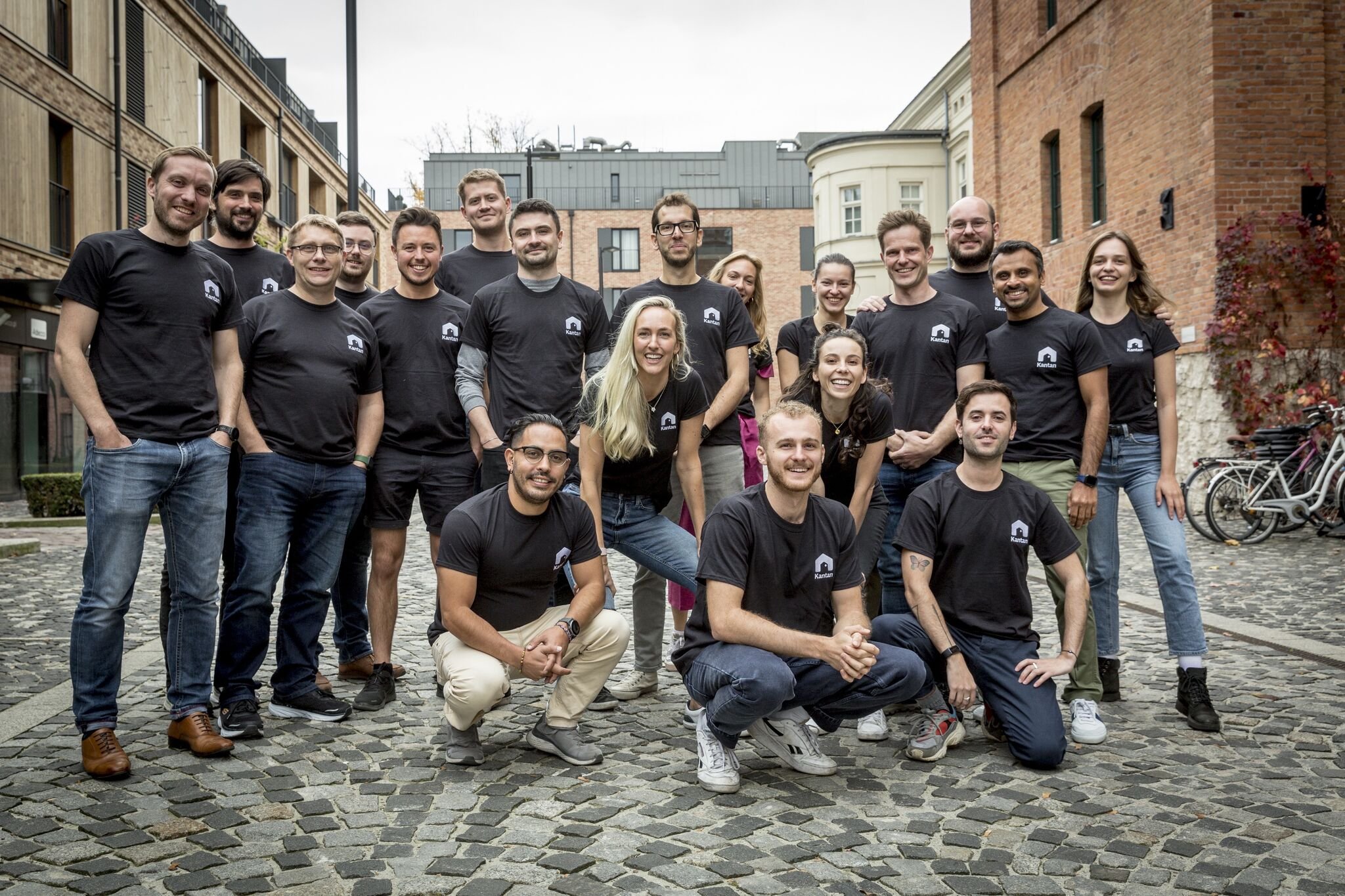
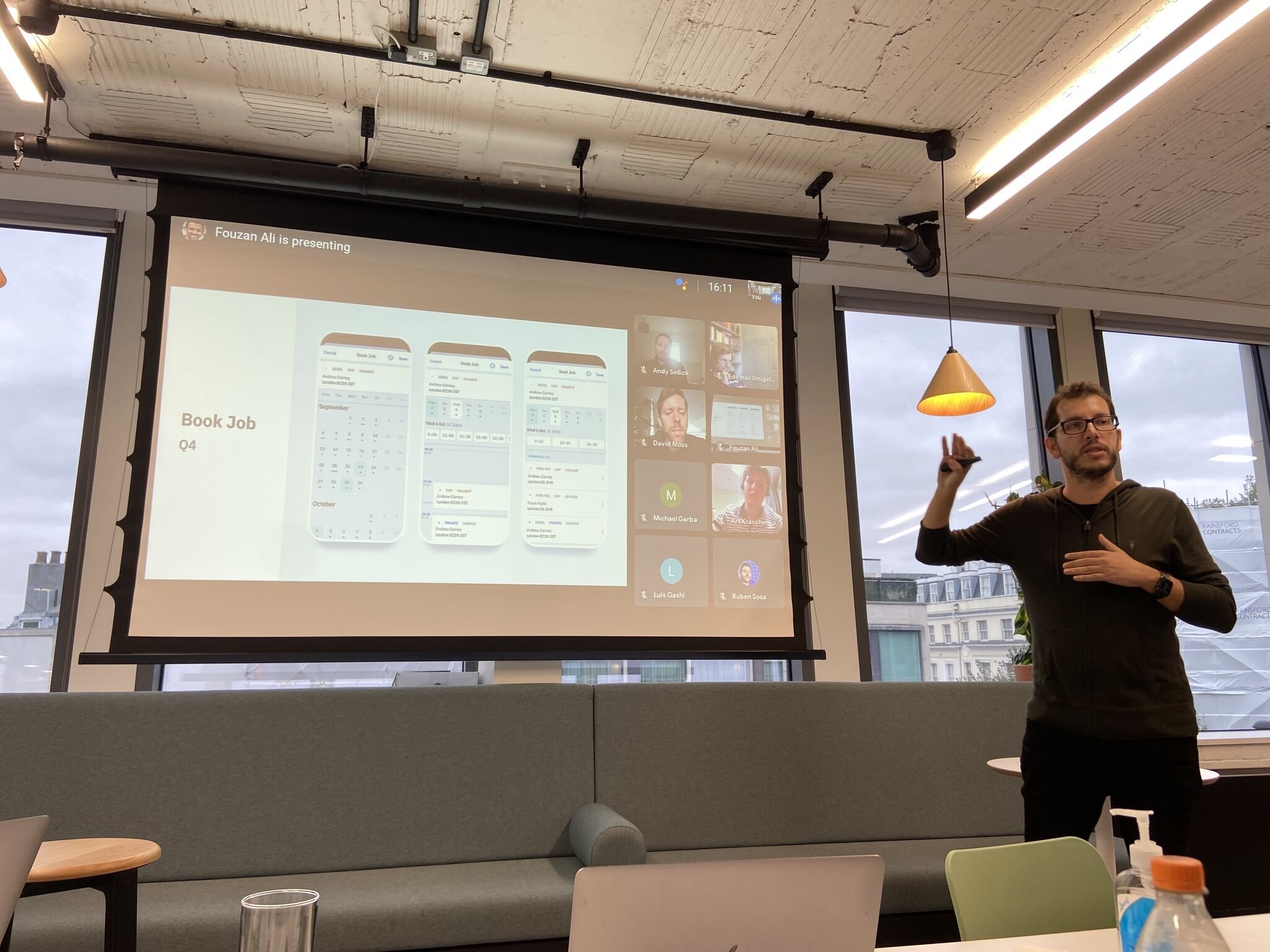
Unifying Kantan’s product and brand experience during scale (OVO)
Ecosystem redesign, design ops foundations, team enablement
Problem
Rapid scaling created fragmentation across Kantan’s brand and product experience, putting clarity and engagement at risk.
Scope
End-to-end redesign of the digital ecosystem (including B2C and B2B solutions) spanning key customer journeys and core touchpoints, grounded in user insights.
Role
Design Director, leading the product redesign, establishing design operations, and mentoring teams through organisational change.
Outcome
A unified, more coherent product and brand experience, improved engagement, and stronger foundations for growth ahead of integration into OVO Energy.

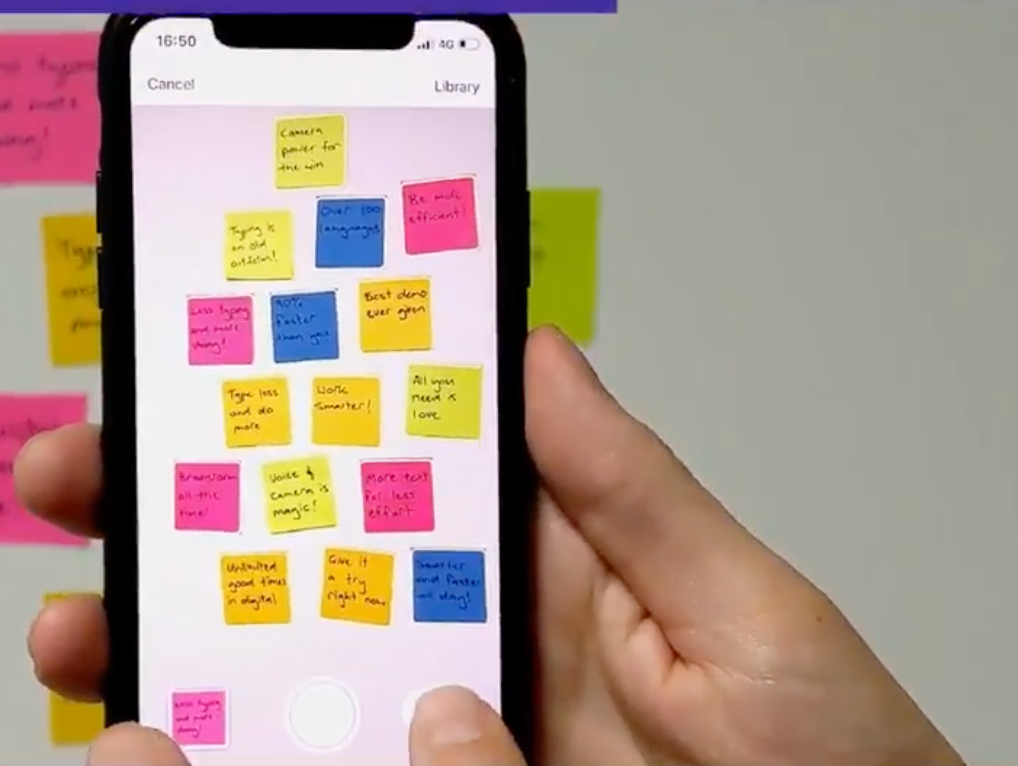
Building Brill.app: rapid note digitisation for workshop teams
0→1 mobile product, iOS/Android launch, award-winning experience
Problem
After workshops, teams lost hours manually digitising handwritten notes and sticky notes, slowing momentum and follow-through.
Role
Product Design Lead & Co-founder, setting product vision and leading UX/UI, creative direction and go-to-market, working closely with engineering in a small agile team.
Scope
End-to-end 0→1 mobile product (iOS and Android), including capture-to-export workflows (voice and image), and integrations with tools like Jira, Trello and Slack.
Outcome
Shipped on iOS and Android within a year; recognised by Apple as “App of the Day” (twice) and “New Apps We Love,” and won the 2020 Innovation Award. The product earned acclaim for speed and usability, and we pivoted quickly during the pandemic as customer needs shifted.


Defining Tigerspike’s vision and brand for differentiation
Global brand direction, experience consistency, and team enablement
Problem
In a crowded digital product market, Tigerspike needed a clearer point of view and a distinct brand identity to stand out.
Role
Product Design Director & Global Head of Brand, shaping vision, leading branding initiatives, and coaching teams to deliver consistently high-quality work.
Problem
Global brand and experience direction across regions and client engagements, ensuring consistency and quality at scale.
Outcome
Stronger brand differentiation and reputation, improved consistency across teams, and recognition for design excellence and awards.
Designing across stages
I’ve worked across the full product lifecycle
This range helps me balance speed, clarity and long-term thinking.
From 0→1 innovation
Brill
to scaling complex operational platforms
Kantan
to transforming global organisations
Tigerspike
to shaping long-term platform direction in regulated fintech
Global Relay
Raising the bar
15 designers • 20 squads • 3→2 sprint wins • ~75% less design debt
My job is to raise the quality of decisions, not just the quality of screens.
I led a distributed group of 15 designers (within a 65-person design org), supporting 20 product squads across mobile (iOS/Android), native desktop (Windows/Linux), and web.
To make quality measurable, I focused the bar on two things that matter at scale: consistency and findability.
I increased design system adoption through streamlined planning, educating TPMs, and better tooling for system communication, and helped establish a dedicated design system team to support product lines early.
I introduced a weekly critique cadence per office, a global “share and align” session, and wider design org reviews every 6–8 weeks, reducing rework and improving cross-site alignment.
That focus, paired with better planning with Product, reduced design debt by ~75% and improved coherence across key journeys.
This improved delivery efficiency: “simple” work moved from 3 sprints to 2, and routine improvements often required ~50% less UX and UI design support.
I scaled ownership through DRIs and a senior–emerging pairing model, and stepped in hands-on when needed. During a high-pressure delivery with four parallel workstreams, I led the information architecture effort, produced four viable options, aligned senior stakeholders quickly, and unblocked the rest of the team.

How I work
Clarity is a competitive advantage
I design for clarity in high-stakes environments by reducing cognitive load and making decisions easier. Across mobile (iOS/Android), native desktop and web, I help teams converge on consistent, findable patterns so customers don’t need a manual to succeed.
This improves trust, reduces cognitive load and helps teams and customers make confident decisions in complex environments.
Product and systems thinking
I balance long-term coherence with iteration by using systems to remove friction, not add process. Stronger design system adoption and clearer documentation enabled simpler work to move from three sprints to two, while reducing routine UX/UI involvement by ~50%.
This creates coherence across platforms, reduces fragmentation and enables teams to scale without losing quality.
Strategy that ships
I translate vision into delivery by turning principles into roadmap decisions and “day-1 safe” solutions teams can ship quickly. With over 20 squads in play, I’ve built lightweight alignment rhythms (weekly critiques + global share-and-align) that improve decision speed and reduce rework.
This turns vision into clear priorities, faster alignment and measurable outcomes rather than abstract roadmaps
Coaching and ownership
I scale quality through people, not policing. I use clear ownership (DRIs) and pairing models (senior + emerging designers), so decisions happen closer to the work, with fewer escalation loops. In practice, this enabled scope expansion for multiple designers and supported promotions into lead roles.
This builds autonomous teams, strengthens decision-making and increases both speed and accountability.


AI-enabled products
I’m particularly interested in how AI supports decision-making, reduces operational friction and augments human workflows in complex environments.
My Approach to AI & Innovation
Human-Centred AI: I use AI to amplify creativity and empathy, not replace them. My focus is on leveraging AI to enhance human experience, streamline workflows, and unlock new possibilities for product and brand innovation.
AI-Driven Design Process: From rapid prototyping and research analysis to content generation and workflow automation, I integrate AI into every stage of the design process—helping teams move faster and make better decisions.
Continuous Experimentation: I actively explore and test emerging AI tools, sharing practical insights and methods through my writing and mentorship, so others can benefit from the latest advancements
Writing & speaking
I write about product, design and leadership in my newsletter, Designverse, focusing on how designers shape strategy, navigate complexity and work in the age of AI.
My work connects real product challenges with broader questions about trust, ethics and the future of our profession.
I also speak and mentor across Europe, delivering talks and masterclasses on product thinking, design strategy and leadership, and I serve as a jury member for the European Design Awards.
Designing in the Age of AI Agents What changes, what stays the same, and why judgment matters more than tools.
Design Is Not a Service
Why silence isn’t neutral and how designers shape power structures.
About
I design products that help people act with confidence in complex and high-stakes environments.
I’m a London-based product design leader working with global teams. Over the past decade, I’ve shaped complex products used by millions across fintech, SaaS and AI. I’m passionate about clarity, trust and building products that make a meaningful difference.